A leaf-less, yet not life-less tree
30 Mar 2009
19 Mar 2009
Going back to the masses
A new democratic experiment in U.K.It was Mahatma Gandhi who realized the importance of masses and engaged them in the fight against discrimination in South Africa. On returning to his homeland, he successfully replicated the model on a much larger scale, which played a decisive role in helping India attain freedom. However, once the job was done, the masses chose to disengage with the politics and allow their representatives do the dirty work. It was quarter a century hence, when Jayaprakash Narayan decided to bring the masses back to the center stage from the wilderness. JP must have succeeded for that made those in power act irresponsibly and plunge the country into the darkest years of Indian democracy, the Emergency.
The politicians still need the masses to get into power but they have learnt all the tricks to deceive and exploit them for their own good. So while the poorer lot still oblige these men by attending their rallies and turning up at the polling booths to vote for them, the not-so-poorer lot prefer voting for reality shows and television surveys, rather than at the general, assembly or local elections.
A new model of engaging the masses has been developed in U.S. by Barack Obama. He made the best use of information technology and communication to form a decisive democratic force of masses which heralded him to the post of the most powerful man in the world.
Taking a cue from all this, a new democratic exercise is being experimented in U.K. I read about it just now in an article by Hasan Suroor in 'The Hindu' and I could not wait but share it with others. If you remember the recent 'Lead India' Campaign of Times of India, then this new experiment in U.K. is just taking such an initiative to its logical conclusion.
A campaign has been launched in the name of 'The Jury Team', which according to its website is a political movement created with the goal of making politics more accessible, politicians more accountable and political institutions more transparent. According to their mission statement, this campaign is against the current political parties that have turned the Government into an Oligarchic institution, a small and increasingly distant group.
This is how the campaign operates- Anyone interested in a political career can put themselves forward through The Jury Team’s website but they must agree not to support any policies that discriminate on the basis of race, colour, gender, sexual orientation, disability or religious or other belief. The general public will be able to vote for their favourite candidate by texting the code of that person to a “unique” text number. The selected candidates will then be fielded as Independents. Moreover, these candidates once elected, would be free of the party whip, i.e., they won't be obliged to follow the dictats of their party but will be independent to vote for the proposals for legislations as they wish to.
This campaign has been launched and funded by millionaire Sir Paul Judge, however as mentioned on their website, they rely on donations to keep running.
The question is for how long can such a non-party party, a term devised by Sir Paul, can remain a non-party. Isn't there every chance of egoism of such people coming in way of high principles set initially. On the first thought, such an experiment will have a chance to survive only if such an individual distants himself from it with time, to allow the masses take it forward, but on a second thought, wont this campaign just wither away if it doesnt get the support and direction of a strong personality.
Moreover, in a country like India which finds itself divided on the lines of religion, caste, region and ethnicity, where the so-called National Parties are being dictated terms by the regional ones, where still the majority doesnt vote for an ideology but for a bottle of country made liquor, where still only a small minority find access to modern technologies, can such an experiment even survive one election. These are the questions that spring once the reality dawns. However, they can be answered only when the experiment has been conducted.
As for the initiative, the best source seems the Indian media. They were so active post-Mumbai carnage, driving their individual campaigns against politicians. It will be interesting to see if they have it in them to do what they preach. As for the initial funding, the media houses can oblige their 'high class' chatterati to donate some bucks, who love to come on the discussion shows and spank the Indian politics and the politicians and then share a glass of wine with the same politicos at their evening parties.
Recently, in India new initiatives are being taken as we see a number of unconventional political parties springing up. There was a technocrats based Lok Paritran and recently an IIM-IIT graduates based political outfit. In a Punjab district recently, the members of the Market Association decided to field their own candidates as they felt, the political parties always forget them after taking donations for their election campaigns. However, rather than coming together to obtain a critical mass, such parties prefer to do it alone. Maybe, with time they realize the importance of united action.
India which has adopted the parliamentary democracy and many of its conventions from U.K. might also give a try to this latest experiment though its still to be seen if it makes any mark in the country of its origin itself being in nascent stages there too.
Image Courtesy
http://www.trekearth.com by Ramesh Lalwani (edited)
11 Mar 2009
The Hamilton Holi
and a note on Pakistan politics
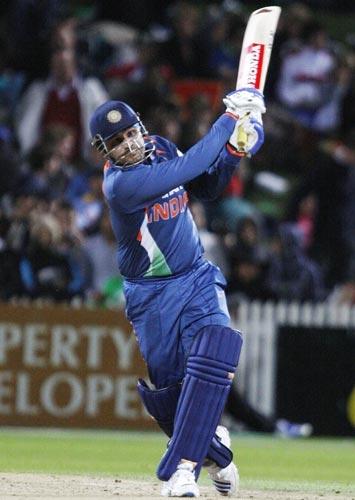
As we celebrated Holi in India, the Men in (the new shade of) Blue had their own plans for celebrations in Hamilton. While the Rain Gods in New Zealand continued to play Holi on and off, the Delhi-Daredevils drenched the Kiwis with the shower of fours and sixes.
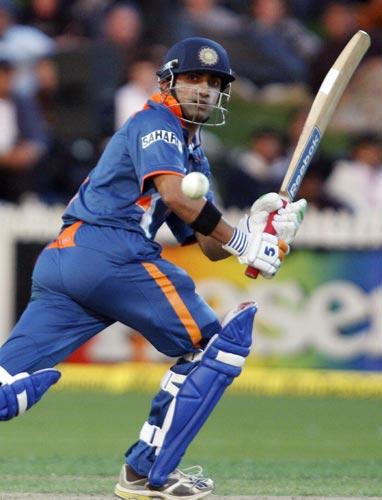
Earlier the Indian bowlers did a good job in restricting the Kiwis just under run a ball but the way Sehwag-Gambhir duo approached the target, it seemed any score would have been indefensible for the black-caps.
Man of the moment, Sehwag's blitzkrieg earned India its first ODI series win in New Zeland and for him in person, the record of the fastest century by any Indian in ODI's. His partner supported him well throughout the innings.
Gautam Gambhir had a humble beginning in the international arena. I remember my cousin from Noida, who had played Inter-College tournaments against his team, telling me about Gambhir's exotic strokeplay and shear power. My cousin, himself a wicket-keeper used to watch Gambhir in awe as he sent the balls hurling out of the stadium. However, having seen his earlier international performances this was difficult to comprehend. But then came IPL. And so came IPL for his opening partner Sehwag, in dire need to resurrect his career. After the tournament there was no looking back. Be it Tests, ODI's, T20's, IPL or Domestic cricket, the two are made for each other.
With due respect to the master-blaster, I believe its time that he recedes to a lower slot in ODI's to allow this dynamic duo play more and more cricket together at the top. It is in the best interest of the Indian cricket team.
_________________________________________________________________
We've heard that history repeats itself but when it comes to Pakistan, it seems to repeat just too frequently. The scenes which were a common place just a year ago are back to haunt democracy in Pakistan.

This cartoon by Keshav in 'The Hindu' portrays it aptly. Ironically, the situation in our neighboring country acts as a balm to heal our woes against our domestic politics. The treacherous credentials of our politicians pale in front of those from Pakistan. It makes us realise how despite its shortcomings, the Indian polity has allowed democracy to survive despite some hiccups in mid-70's.
As for Pakistan, in the words of Nawaz Sharif, within a year, the ghost of Musharraf has resurrected itself in the form of Zardari. Today speaking at a rally, Sharif, in a bid to underscore his concern for constitutional reforms to restore the balance of power back in the favour of Prime Minister as in pre-Musharraf times, did not indulge in any mud-slinging against the present PM Yousuf Raza Gilani, rather supported him, keeping his own political ambitions at bay as of now. As noted by 'Times Now', Prime Minister Gilani too looked defiant later in the evening as he spoke of democracy, 1973 Constitution and early withdrawal of President's rule from Punjab, not in sync with President Zardari's assertions. However, it will be interesting to see if it indeed is defiance to Zardari or just a 'good cop/bad cop' ploy of PPP to soothe the increasing unrest among the masses ignited by PML(N).
My heart goes out to the common man in Pakistan who so emphatically voted for change and democracy last year but got nothing but dirty politics in return. However, in the present context too, I believe, as noted in my previous post, that the polity of any nation is just a reflection of its society. Its high time that Asif Ali 'Bhutto' Zardari backtracks and yields, or his future too seems to be going the same way as that of Musharraf.
Images Courtesy
Cricket- http://im.rediff.com (original)
Cartoon- http://www.hinduonnet.com by Keshav (original)
As we celebrated Holi in India, the Men in (the new shade of) Blue had their own plans for celebrations in Hamilton. While the Rain Gods in New Zealand continued to play Holi on and off, the Delhi-Daredevils drenched the Kiwis with the shower of fours and sixes.

Earlier the Indian bowlers did a good job in restricting the Kiwis just under run a ball but the way Sehwag-Gambhir duo approached the target, it seemed any score would have been indefensible for the black-caps.
Man of the moment, Sehwag's blitzkrieg earned India its first ODI series win in New Zeland and for him in person, the record of the fastest century by any Indian in ODI's. His partner supported him well throughout the innings.
Gautam Gambhir had a humble beginning in the international arena. I remember my cousin from Noida, who had played Inter-College tournaments against his team, telling me about Gambhir's exotic strokeplay and shear power. My cousin, himself a wicket-keeper used to watch Gambhir in awe as he sent the balls hurling out of the stadium. However, having seen his earlier international performances this was difficult to comprehend. But then came IPL. And so came IPL for his opening partner Sehwag, in dire need to resurrect his career. After the tournament there was no looking back. Be it Tests, ODI's, T20's, IPL or Domestic cricket, the two are made for each other.With due respect to the master-blaster, I believe its time that he recedes to a lower slot in ODI's to allow this dynamic duo play more and more cricket together at the top. It is in the best interest of the Indian cricket team.
_________________________________________________________________
We've heard that history repeats itself but when it comes to Pakistan, it seems to repeat just too frequently. The scenes which were a common place just a year ago are back to haunt democracy in Pakistan.

This cartoon by Keshav in 'The Hindu' portrays it aptly. Ironically, the situation in our neighboring country acts as a balm to heal our woes against our domestic politics. The treacherous credentials of our politicians pale in front of those from Pakistan. It makes us realise how despite its shortcomings, the Indian polity has allowed democracy to survive despite some hiccups in mid-70's.
As for Pakistan, in the words of Nawaz Sharif, within a year, the ghost of Musharraf has resurrected itself in the form of Zardari. Today speaking at a rally, Sharif, in a bid to underscore his concern for constitutional reforms to restore the balance of power back in the favour of Prime Minister as in pre-Musharraf times, did not indulge in any mud-slinging against the present PM Yousuf Raza Gilani, rather supported him, keeping his own political ambitions at bay as of now. As noted by 'Times Now', Prime Minister Gilani too looked defiant later in the evening as he spoke of democracy, 1973 Constitution and early withdrawal of President's rule from Punjab, not in sync with President Zardari's assertions. However, it will be interesting to see if it indeed is defiance to Zardari or just a 'good cop/bad cop' ploy of PPP to soothe the increasing unrest among the masses ignited by PML(N).
My heart goes out to the common man in Pakistan who so emphatically voted for change and democracy last year but got nothing but dirty politics in return. However, in the present context too, I believe, as noted in my previous post, that the polity of any nation is just a reflection of its society. Its high time that Asif Ali 'Bhutto' Zardari backtracks and yields, or his future too seems to be going the same way as that of Musharraf.
Images Courtesy
Cricket- http://im.rediff.com (original)
Cartoon- http://www.hinduonnet.com by Keshav (original)
5 Mar 2009
Upon each shoulder lies the weight!
It can't be shirked, it can't be swayed..
Before reading this post, please read the previous, 'Aren't you just one of them?' because this is just an extension to what I 'penned' last time.
There was a reason why I asked you to introspect. The day I wrote this poem, I was having a discussion with a cousin. The topic was a common one; the falling standards of Indian polity and administration. On a fault-finding spree, he kept rattling one example after the other, all the time cursing the netas and the babus. Once he was done or rather when I was done(listening), I just asked him some simple questions. These (and some others) are the ones which I included in my poem later in the day.
Its very convenient for us to find scapegoats. Our polity and administration are the easiest ones, for the simple reason that they have hand in everything and that they deserve the backlash for anything going wrong. Just see how even I've turned critical. Its true that as citizens, we have the right to demand sincerity from our elected representatives and their executives. However, we should not forget that our polity and administration is just a reflection of our society and 'we' are the society.
When the 'Mumbai carnage' happened, we all were up against the polity. We were frustrated, we were agitated and we wanted accountability. The 'system' again failed us. Those who had been sent to represent us, again let us down.
We want tighter security. We want all the pores to be sealed but are we ready for it. Remember the last time you visited a multiplex and were frisked at the gate With time running out for the movie, how you asked the guard, "C'mon bhaiya! Do I look like a terrorist to you?" This is the very attitude of 'chalta hai' that we see so often in our bureaucracy. So you see from where it comes.
This may sound cliche, but who is being corrupt when on breaking a traffic rule, you prefer giving 50 bucks to the traffic hawaldar than accepting your mistake, letting him cut your challan and paying the due amount to the concerned authority.
I realize how easy it is for us to approach turpitude from virtuousness than the other way round. In New Delhi, where I stayed for half an year or so, I had to travel daily in the metro. Initially, I was in a habit of offering my seat to the aged and the ladies standing in the aisle. However, as time passed and I saw the depravity of my fellow passengers, I started hesitating in doing so. Though, I still had the courtesy to stand up for say, a pregnant lady or a frail looking elderly; but for each time doing so, I had to run a program in my mind to assess if the person fulfilled all the criteria to be showered with my chivalry. So from being a 'good boy', I became 'not so good boy'.
We have to learn to hold on to our virtues to ask others to do so. Here, I remember a story, one of my teacher in primary school told us. I am not sure if its true or not but definitely its quite effective. It goes something like this.
Once a person brought his son to Mahatma Gandhi and complained that he eats a lot of sugar. However, as he has a lot of regard for Mahatma, he might start resisting his temptation if Mahatma asks him to do so. However, Gandhiji asked them to come back after a couple of days. Even the next time they were returned to come back later. On the next visit, Gandhiji apologized to the person saying that he can't fulfill his simple wish as he himself has a sweet tooth. All these days he had been trying to resist but failed. So he has no moral right to ask the young one to do so.
So do we have the right to ask for accountability from our elected representatives? Yes, we do have the constitutional and legal right. However, we lose our moral right to do so by a fraction, every time we indulge in depravity and corruption. My questionnaire in the previous post must have helped you to gauge where you stand in this respect.
'Slumdog millionaire' might have disturbed us by showcasing our dirt and filth but remember we all have made a 'worthy' contribution in keeping our cities unclean. So only Government cannot be blamed for not providing enough safai-karamcharis, we all have to take the blame for it.
So next time you throw an empty wrapper out of the car window, you are also throwing a fraction of your moral right out with it. I have thrown out such fractions so many times that I've lost the count.
Moreover, now with the elections just round the corner, if you decide not to visit the polling booth, then you'll also be foregoing a big chunk of your constitutional and legal right.
So rather than being this monkey pointing fingers at others, it's better to be wholesome in ourselves. An effort can be made for sure.
These parting lines might strike a chord or two.
Before reading this post, please read the previous, 'Aren't you just one of them?' because this is just an extension to what I 'penned' last time.
There was a reason why I asked you to introspect. The day I wrote this poem, I was having a discussion with a cousin. The topic was a common one; the falling standards of Indian polity and administration. On a fault-finding spree, he kept rattling one example after the other, all the time cursing the netas and the babus. Once he was done or rather when I was done(listening), I just asked him some simple questions. These (and some others) are the ones which I included in my poem later in the day.
Its very convenient for us to find scapegoats. Our polity and administration are the easiest ones, for the simple reason that they have hand in everything and that they deserve the backlash for anything going wrong. Just see how even I've turned critical. Its true that as citizens, we have the right to demand sincerity from our elected representatives and their executives. However, we should not forget that our polity and administration is just a reflection of our society and 'we' are the society.
When the 'Mumbai carnage' happened, we all were up against the polity. We were frustrated, we were agitated and we wanted accountability. The 'system' again failed us. Those who had been sent to represent us, again let us down.
We want tighter security. We want all the pores to be sealed but are we ready for it. Remember the last time you visited a multiplex and were frisked at the gate With time running out for the movie, how you asked the guard, "C'mon bhaiya! Do I look like a terrorist to you?" This is the very attitude of 'chalta hai' that we see so often in our bureaucracy. So you see from where it comes.
This may sound cliche, but who is being corrupt when on breaking a traffic rule, you prefer giving 50 bucks to the traffic hawaldar than accepting your mistake, letting him cut your challan and paying the due amount to the concerned authority.
I realize how easy it is for us to approach turpitude from virtuousness than the other way round. In New Delhi, where I stayed for half an year or so, I had to travel daily in the metro. Initially, I was in a habit of offering my seat to the aged and the ladies standing in the aisle. However, as time passed and I saw the depravity of my fellow passengers, I started hesitating in doing so. Though, I still had the courtesy to stand up for say, a pregnant lady or a frail looking elderly; but for each time doing so, I had to run a program in my mind to assess if the person fulfilled all the criteria to be showered with my chivalry. So from being a 'good boy', I became 'not so good boy'.
We have to learn to hold on to our virtues to ask others to do so. Here, I remember a story, one of my teacher in primary school told us. I am not sure if its true or not but definitely its quite effective. It goes something like this.
Once a person brought his son to Mahatma Gandhi and complained that he eats a lot of sugar. However, as he has a lot of regard for Mahatma, he might start resisting his temptation if Mahatma asks him to do so. However, Gandhiji asked them to come back after a couple of days. Even the next time they were returned to come back later. On the next visit, Gandhiji apologized to the person saying that he can't fulfill his simple wish as he himself has a sweet tooth. All these days he had been trying to resist but failed. So he has no moral right to ask the young one to do so.
So do we have the right to ask for accountability from our elected representatives? Yes, we do have the constitutional and legal right. However, we lose our moral right to do so by a fraction, every time we indulge in depravity and corruption. My questionnaire in the previous post must have helped you to gauge where you stand in this respect.
'Slumdog millionaire' might have disturbed us by showcasing our dirt and filth but remember we all have made a 'worthy' contribution in keeping our cities unclean. So only Government cannot be blamed for not providing enough safai-karamcharis, we all have to take the blame for it.
So next time you throw an empty wrapper out of the car window, you are also throwing a fraction of your moral right out with it. I have thrown out such fractions so many times that I've lost the count.

Moreover, now with the elections just round the corner, if you decide not to visit the polling booth, then you'll also be foregoing a big chunk of your constitutional and legal right.
So rather than being this monkey pointing fingers at others, it's better to be wholesome in ourselves. An effort can be made for sure.
These parting lines might strike a chord or two.
Upon each shoulder lies the weight!
It can’t be shirked, it can’t be swayed.
You’ll try that someone else falls prey,
For yourself, you'll search an easy way.
Today you might shut your eyes and say,
“Hey, let’s keep it for some other day!”
But how long will you keep it at bay?
For upon each shoulder lies the weight!
Those who realize it well in time,
Won't lose a penny or a single dime.
They’ll do it while others pretend and mime.
With shoulders feeling light and sublime,
They’ll hear the eternal satisfaction chime.
Don’t bother that next line doesn’t rhyme ;)
For upon each shoulder lies the weight!
Image Courtesy
http://superpowersthatbe.blogspot.com (original)
28 Feb 2009
Aren't you just 'one of them'?
When was the first time, you told yourself
"No, no, no... not me! I am not one of them."
When was the last time you cautiously reaffirmed
"No, no... not me! I can not be one of them."Can you stop snickering when a fat fella falls?
Don't you run to the bushes when in urgency nature calls?
Can you stop an eve teaser from making an obscene note?
Don't you prefer a drive when there's a day off to vote?Can you stop jumping the queue when the time seems short?
Don't you love poking others but yourself easily get out of sorts?
Can you stop your bike to help a blind man cross?
Don't you use the roadside as a bin to throw your dross?
Can you stop gazing till the maid finally passes an angry glance?Don't you keep sitting while the aged in the aisle changes her stance?
Can you stop breaking others' windows while playing evening cricket?
Don't you pay the cop some bucks to avoid an overspeeding ticket?
Can you stop scratching your back while standing for the anthem?
Don't you just need a lame pretext to create ruckus and mayhem?
If you have answered these sequentially, in yesses and nays,
Then congrats my friend! You indeed aren't one of them.
As for me, I realise 'O Lord', still some gap remains.
Till I fill this lacuna, I am doomed to be just one of them!
Image Courtesy
http://blog.lib.umn.edu and http://photography.nationalgeographic.com (edited)
Image Courtesy
http://blog.lib.umn.edu and http://photography.nationalgeographic.com (edited)
23 Feb 2009
"I chose love and I'm here"
Jai Ho!
I may have used the title of this Oscar winning song as the sub-title of my post but frankly speaking, I do not believe that it actually deserved any award. In our Mumbai film industry this song would have lost in oblivion. However, the man behind it definitely deserves a lot. Even he might agree that this is not even close to his best work but then who cares. He has won the Oscar for it and the fact to rejoice is that our very own Rahman, humming to whose tunes we have grown up is now a world acclaimed composer.

I happened to switch on the television in the morning, just in time to see A.R. Rahman receive his first Academy award. On receiving his second Oscar, Allah Rakha Rahman made a beautiful statement to end his acceptance speech. He, in his ever-soft spoken tone remarked, "..[A]ll my life I had a choice of hate and love. I chose love and I'm here."
What was his context, only he knows the best. However, I could not help but see this statement in a much larger context. Rahman, a Muslim by faith(though not by birth) and Tamil by ethnicity has seen his brethren choosing the other path, that of hatred.
So, while the world bleeds to Islamic terror, Sri Lanka has been bleeding to Tamil terror. I must note here that by making this statement, I do not intend to stereotype any community and question their genuine grievances.
However, the message given out by Rahman could not have been more apt for the occasion. We all, irrespective of our ethnicity or religious faith can learn a lot out of this simple statement.
Kudos is due him for his achievement against all odds. Jai ho!
Image Courtesy
http://www.oscar.com (original)
30 Jan 2009
My 'de-reservations' about the Reservation
An ELian viewThe memories of anti-reservation protests haven't faded yet. We might have stopped talking about it as there are other issues to discuss about but to think the matter is over is too naive a view. Say, one fine morning Government decides to introduce reservation for religious minorities or any other disadvantaged group for that matter, the agenda will be back in limelight. There will be angry protests by the sections being negatively affected by this policy of positive discrimination, then there will be protests against the aforesaid protests by the sections being covered in the ambit of the new policy and there will be every possibility of these antagonist protests taking an ugly turn.
Meanwhile the media will have a field day. Everyone from a rickshaw-wala to a business tycoon will be seen pouring out their staggered and half baked views on the tube. Some looser might decide to light himself on fire to show his devotion to either cause. The scenes will be bad, the time will be bad. However, as it always happens, the present will become the past and the past is best forgotten to prepare for the future. We tend to make this mistake believing that future will bring something new, never realizing that clues of the future lie in the past itself.
I remember taking part in an anti-reservation rally back in 2006. How angry I was, how cheated I felt and now I realise how narrow my view was. It's not that now I am in perfect consonance with this variant of Affirmative Action but certainly now, I am able to see it as an essential tactic in the larger national strategy of achieving redistributive justice. However, the problem arises when it becomes 'an end in itself'. The policy makers at the high echelons forget the other tactical policy initiatives and hence everything gets eclipsed by the reservation policy.
Talking of reservation in educational institutes, it may be a strong pillar of affirmative action but foundation of such an affirmative action lies in universal reach of effective primary and secondary education. However, as the latter reaps fruits only in a long term, its sincere implementation gets neglected by the political class for whom quick returns matter the most to maintain their parliamentary strength. What can be a better option for them than the reservation policy! Hence, 'displacement of goals' takes place as reservation policy becomes a means to satisfy a different end altogether, i.e., amassing votes at the elections. Vote-bank politics leads to innovations to include more and more sections of the society within the reservation ambit rather than clipping down the list.
If we look into our caste history, we witness a phenomena known as Sanskritization wherein the so called lower castes strive to move up the caste hierarchy by adopting 'cleaner' habits, to achieve a higher status in the society. However, in present scenario, we see people fighting to move down the hierarchy, the recent Gujjar agitation its apt example. So some sort of 'de-sanskritization' is taking place in contemporary Hindu society. The reason behind it is not far-fetched. With lower status comes better reservation provisions. Better the provisions, better the chance to rise the class and political hierarchy. The money and power provide a parallel means to attain a higher status in the society. Hence, diminution in the import of the caste based hierarchy as a means to attain the same takes place.
With this background to ponder over, I'll now be addressing those anti-reservationists who discard this policy in totality, i.e., in both letter and spirit. I must say they are making a grave mistake. By doing so, they are alienating the marginal sections of the society. The need is to accept the reservation policy in principle but oppose its misuse vehemently. India has a long history of caste system. To uproot all the associated ills, affirmative action is a must. As mentioned earlier, reservation is a strong pillar of the same. However, it should only be used if its right implementation is guaranteed or at least sincere efforts are made by the administration for the same.
Those opposing the misuse, should foremost take the marginal sections into confidence. These sections must be shown, how those in power want to keep them marginal to reap their votes by making false promises year after year. In a number of cases, the real enemies of the marginalized sections tend to be those from amongst their own ranks only, who have successfully attained power over the years. Till yesterday the two were equals but today one is the 'mai-baap' of the other. Hence, they will try their best to keep this equation in their own favour by perpetuating the miseries of their brethren. They'll make promises but tactfully keep them unfulfilled and put the blame on the 'others'.
Hence, the breed of anti-reservationists, I am addressing here, help such manipulators by distinguishing themselves as a pool of 'others' against whom the wrath of the marginal sections can be directed by the dominant ones amongst them.
Things are not always black or white. Its important to identify the different shades of grey that lie within. Think about it.
Image Courtesy
Not traceable. Kindly Intimate me for due credits.
23 Jan 2009
Of wars and awards
In brief..
In the last couple of weeks, busy with the preparations for my upcoming examination, I have being craving for some time to blog. Here 'some' can mean anywhere between 2-4 hours for a single posting. The previous post on Satyam took below half an hour as it had a very narrow scope. But the ideas which were coming in my mind these days needed more elaborate analysis and hence more time.
For example, my incongruent views on Palestine, Tamil Eelam and Kashmir issue. War has been raging in Sri Lanka and ceasefire was recently declared in Gaza but humanitarian crisis in both the regions are abundant. In the crossfire between the warring armies and the militant outfits, the price is paid by the innocent civilians. However, while I find myself sympathizing with the Palestinian cause, I am at least agreement with ‘L.T.T.E.'s struggle for Tamilian cause’ in Sri Lanka or for that matter coming back to India, Jihadist's call for azaadi in 'our' Kashmir.
At a first look these three issues seem very similar but on a closer look at the causes of origin, related ideology, methodology employed, overall organization and the leadership, one may unearth the differences. Even when such a deep analysis is undertaken by various persons, views bound to differ. On my behalf, with a caveat that neither my analysis is amateurish nor highly professional, I stand by my views that while the Jewish state of Israel is the real culprit in the Middle East crisis for last half a century, neither the present Sri Lankan establishment nor the Indian can be indicted on the remaining two issues respectively. However, my case is not that the Tamilian grievances or the Kashmiri grievances don't hold any weight but it is that those who claim to represent these grievances are only aggravating them.
Moreover, in the case of Middle East, Israel is being very adamant and with the backing of U.S. has chosen the path of belligerence instead of attending to the Palestinian grievances in an honest way. On the other hand, while Indian Government has been making democratic strides in Kashmir despite all the hurdles being placed by those from across the border, even the present Sri Lankan Government is waging the war to uproot the LTTE which has been fighting a loosing agenda having no connection to the genuine Tamilian grievances in the emerald island. Any work of reform is only possible when LTTE is wiped out of the the Northern and Eastern provinces.
What makes me say this needs a long explanation, a journey through the history of these three intriguing issues, for which I presently don’t have the time. So let’s keep it for sometime in future.
Now coming to another very hotly debated topic these days. What is it about India that the Westerners want to see? If the Bookers or Oscars are any indication to this, then definitely they love to see, read and thence award the wretchedness of India. Of course, I am pointing towards the two pieces of art, one literary which goes by the title 'The White Tiger' penned by Arvind Adiga and the other from the world of cinema which goes by the title 'Slumdog Millionaire' adapted from Vikas Swarup's 'Q&A' and directed by British director Danny Boyle.
People may accuse me of being too critical and ultra-nationalist, but believe me, I liked both the novel and the movie. The best thing about both is the way they have been woven. While the former is in the form of letters written by a 'rags to riches' Indian entrepreneur to Chinese premiere telling him the story of his journey from 'Darkness' to light, the latter shows the journey of a 'slumdog' from 'rags to riches' through a quiz game show. Both show the different shades of Indian reality like the caste system, communalism, shining metropolitans but ‘dark’ slums and villages, brothels, beggars, dirty politics, mafia, booming call centers, etc. in a unique fashion. Both are praiseworthy indeed.
However, my only question is why the Westerners only like to award the wretchedness of India. Again, I am not saying that they have no right to portray these realities. Danny Boyle as a British or Adiga as an Indian, both have the freedom to create whatever they want. Moreover what they have created portrays the truth. So my case is not against them. They are being awarded for their pieces of art and they do deserve it. However, I just get this feeling that Westerners tend to get very narrow about their view of East when it comes to appreciating its realities.
So they award a 'Blood Diamond' and 'The Last King of Scotland' when it comes to Africa, and 'The White Tiger' and 'Slumdog Millionaire' when it comes to India. They tend to have this impression that real cinema needs to be awarded, which is a good criteria indeed but why does the reality have to be wretched when the subject is India or Africa.
Again, I agree 'Slumdog Millionaire' is more about hopes and destiny of a young child and Boyle tried to capture that feeling through this portrayal. However, still I am apprehensive about the criteria used by the Westerners. Is it simply the quality of the art or the particular quantity, i.e., content that they like to see. Anyways keeping my apprehensions on hold, I must congratulate those behind the movie and wish them luck for Oscars.
It’s time to get back to some serious studies. I hope the next time I blog, I have ample time to treat my post in a better way. Adieu.
Images Courtesy
1. http://www.au.af.mil (original)
2. http://www.apha.org (edited)
In the last couple of weeks, busy with the preparations for my upcoming examination, I have being craving for some time to blog. Here 'some' can mean anywhere between 2-4 hours for a single posting. The previous post on Satyam took below half an hour as it had a very narrow scope. But the ideas which were coming in my mind these days needed more elaborate analysis and hence more time.For example, my incongruent views on Palestine, Tamil Eelam and Kashmir issue. War has been raging in Sri Lanka and ceasefire was recently declared in Gaza but humanitarian crisis in both the regions are abundant. In the crossfire between the warring armies and the militant outfits, the price is paid by the innocent civilians. However, while I find myself sympathizing with the Palestinian cause, I am at least agreement with ‘L.T.T.E.'s struggle for Tamilian cause’ in Sri Lanka or for that matter coming back to India, Jihadist's call for azaadi in 'our' Kashmir.
At a first look these three issues seem very similar but on a closer look at the causes of origin, related ideology, methodology employed, overall organization and the leadership, one may unearth the differences. Even when such a deep analysis is undertaken by various persons, views bound to differ. On my behalf, with a caveat that neither my analysis is amateurish nor highly professional, I stand by my views that while the Jewish state of Israel is the real culprit in the Middle East crisis for last half a century, neither the present Sri Lankan establishment nor the Indian can be indicted on the remaining two issues respectively. However, my case is not that the Tamilian grievances or the Kashmiri grievances don't hold any weight but it is that those who claim to represent these grievances are only aggravating them.
Moreover, in the case of Middle East, Israel is being very adamant and with the backing of U.S. has chosen the path of belligerence instead of attending to the Palestinian grievances in an honest way. On the other hand, while Indian Government has been making democratic strides in Kashmir despite all the hurdles being placed by those from across the border, even the present Sri Lankan Government is waging the war to uproot the LTTE which has been fighting a loosing agenda having no connection to the genuine Tamilian grievances in the emerald island. Any work of reform is only possible when LTTE is wiped out of the the Northern and Eastern provinces.
What makes me say this needs a long explanation, a journey through the history of these three intriguing issues, for which I presently don’t have the time. So let’s keep it for sometime in future.
Now coming to another very hotly debated topic these days. What is it about India that the Westerners want to see? If the Bookers or Oscars are any indication to this, then definitely they love to see, read and thence award the wretchedness of India. Of course, I am pointing towards the two pieces of art, one literary which goes by the title 'The White Tiger' penned by Arvind Adiga and the other from the world of cinema which goes by the title 'Slumdog Millionaire' adapted from Vikas Swarup's 'Q&A' and directed by British director Danny Boyle.People may accuse me of being too critical and ultra-nationalist, but believe me, I liked both the novel and the movie. The best thing about both is the way they have been woven. While the former is in the form of letters written by a 'rags to riches' Indian entrepreneur to Chinese premiere telling him the story of his journey from 'Darkness' to light, the latter shows the journey of a 'slumdog' from 'rags to riches' through a quiz game show. Both show the different shades of Indian reality like the caste system, communalism, shining metropolitans but ‘dark’ slums and villages, brothels, beggars, dirty politics, mafia, booming call centers, etc. in a unique fashion. Both are praiseworthy indeed.
However, my only question is why the Westerners only like to award the wretchedness of India. Again, I am not saying that they have no right to portray these realities. Danny Boyle as a British or Adiga as an Indian, both have the freedom to create whatever they want. Moreover what they have created portrays the truth. So my case is not against them. They are being awarded for their pieces of art and they do deserve it. However, I just get this feeling that Westerners tend to get very narrow about their view of East when it comes to appreciating its realities.
So they award a 'Blood Diamond' and 'The Last King of Scotland' when it comes to Africa, and 'The White Tiger' and 'Slumdog Millionaire' when it comes to India. They tend to have this impression that real cinema needs to be awarded, which is a good criteria indeed but why does the reality have to be wretched when the subject is India or Africa.
Again, I agree 'Slumdog Millionaire' is more about hopes and destiny of a young child and Boyle tried to capture that feeling through this portrayal. However, still I am apprehensive about the criteria used by the Westerners. Is it simply the quality of the art or the particular quantity, i.e., content that they like to see. Anyways keeping my apprehensions on hold, I must congratulate those behind the movie and wish them luck for Oscars.
It’s time to get back to some serious studies. I hope the next time I blog, I have ample time to treat my post in a better way. Adieu.
Images Courtesy
1. http://www.au.af.mil (original)
2. http://www.apha.org (edited)
7 Jan 2009
A'Satyam' ... asundaram
70000000000 is a huge number, a seven followed by ten sifars. And when it gets translated into money by prefixing a 'Rs.' tag to it, it becomes even bigger.
Corporate Governance gone haywire
When i switched on my television set this morning, I was welcomed with a piece of breaking news- "Satyam chairman Raju resigns". It was expected sooner or later, so there was nothing breaking about it. So, i just changed the channel and started surfing through. What I missed then was that this resignation did not come in the wake of Maytas acquisition controversy but a bigger and more sinister controversy that had been brewing all this time.
So when i again visited the news channel after having waded through the movies, animation, music channels et al, I came to know about the real news. B. Ramalinga Raju, the charismatic founder and Chairman of Satyam Computer Services Ltd, in a letter to the (still remaining) Board of Directors of his company, "with deep regret and tremendous burden that I am carrying on my conscience", admitted to a fraud to the tune of Rs 7,000 crore.
Fortunes of the India's fourth largest IT company started to take a U-turn when last month, following the strong resistance by its investors, the company had to backtrack on its decision to acquire two infrastructure firms Maytas Properties and Maytas Infrastructure promoted by the founder's family. Following this, a number of independent directors stepped down owning moral responsibility for not opposing the failed acquisition.
This news was followed by another revelation within a weeks time that the company has been barred from all business at the World Bank for eight years. The reason provided was that Satyam had been found providing 'improper benefits' or in simple terms, bribing the bank staff to acquire contracts. There have also been allegations against Satyam of causing security breaches at the bank.
As if all this was not enough to bring disrepute to this reputable Indian firm, now comes the biggest news of all. Mr. Raju has admitted that he had falsified the accounts and assets of his company and inflated its profits, hence taking the shareholders on a ride. However, Mr. Raju was also on a dangerous ride himself as he puts it in his letter to the BoD. He writes, "It was like riding a tiger, not knowing how to get off without being eaten."
This is undoubtedly, one of the most controversial cases of corporate governance gone haywire in the recent history of Corporate India. We have had Harshad Mehtas and Ketan Parekhs but this is a case apart as here at the centre of the big fraud is not just any stock broker but the founder and chairman of one of India's pioneering company. In all the economic mess we have been seeing of late, as skeletons kept tumbling out of the Corporate West's cupboard , we in India atleast felt proud of our corporate sector for not having indulged in any wrongdoing. But now the myth has been broken.
Mr. Raju further reveals that Satyam had planned to complete the Maytas acquisition deal "as the last attempt to fill fictitious assets with real ones." Hence, the Maytas fraud was just a last ditched attempt to keep a much bigger fraud from being exposed. Chester Barnard, the first to carry out a comprehensive analysis of the decision making process had clearly classified the decisions into the organizational ones and the private ones. However, when a corporate executive tends to merge the two, problems are bound to arise. One wonders how many more such frauds, the companies in India must be committing to keep their bigger frauds under the veil.
I am not a shareholder of any company and don't even plan to be in near future, but still i feel cheated by this revelation. I feel cheated as i do when I hear about M.P.'s taking bribe for casting their votes in the parliament. I feel cheated as i do when I hear about a public bridge collapsing due to substandard cement used by the contractor. I feel cheated as i do when I hear about a policeman beating an innocent to death for not admitting a false accusation. I feel cheated as i do when I hear about a government in charge inciting communal violence to earn votes in upcoming elections.
Most of us have a tendency to ask for transparency and accountability in the government affairs, hence seeking what is better know as good governance. However, it is the time we realise that good corporate governance is as important as good governance.
Corporate Governance includes the policies and procedures adopted by a company in achieving its objectives in relation to its shareholders, customers and suppliers, regulatory authorities and the community at large.
The provisions like the induction of specified number of independent directors in a listed company has been made to realise good corporate governance. However, the Maytas acquisition controversy makes it clear, that much more needs to be done to fill any gaps left. Moreover, today's revelation asks for stringent regulatory as well as auditory provisions for private enterprises of all hues and colours. Stricter legal provisions and punishments for the defaulters will also act as a deterrent.
Although Mr. Raju claims in his letter that he made no monetary gains out of this fraud, which itself is a hard fact to digest, this does not diminish the gravity of his misdemeanor. Moreover, he will have to face legal action not only in India but also U.S. as his company is listed there too. Mr. Raju ends his letter claiming, "I am now prepared to subject myself to the laws of the land and face the consequences thereof." Government of India should act swiftly to make a strong case against Mr. Raju to send out a tough message to others in the same league and safeguard the global reputation of Corporate India.
As the trading day came to an end, the shares of Satyam Computers had plunged by nearly 80% post-fraud revelation. At the time when the investor confidence is already very low, such incidences can make the job even more difficult for the government and the corporate sector as a whole. One hopes there aren't any more skeletons waiting to tumble out of the Corporate India's cupboard.
Image Courtesy
http://www.adasoftware.com (edited)
Corporate Governance gone haywireWhen i switched on my television set this morning, I was welcomed with a piece of breaking news- "Satyam chairman Raju resigns". It was expected sooner or later, so there was nothing breaking about it. So, i just changed the channel and started surfing through. What I missed then was that this resignation did not come in the wake of Maytas acquisition controversy but a bigger and more sinister controversy that had been brewing all this time.
So when i again visited the news channel after having waded through the movies, animation, music channels et al, I came to know about the real news. B. Ramalinga Raju, the charismatic founder and Chairman of Satyam Computer Services Ltd, in a letter to the (still remaining) Board of Directors of his company, "with deep regret and tremendous burden that I am carrying on my conscience", admitted to a fraud to the tune of Rs 7,000 crore.
Fortunes of the India's fourth largest IT company started to take a U-turn when last month, following the strong resistance by its investors, the company had to backtrack on its decision to acquire two infrastructure firms Maytas Properties and Maytas Infrastructure promoted by the founder's family. Following this, a number of independent directors stepped down owning moral responsibility for not opposing the failed acquisition.
This news was followed by another revelation within a weeks time that the company has been barred from all business at the World Bank for eight years. The reason provided was that Satyam had been found providing 'improper benefits' or in simple terms, bribing the bank staff to acquire contracts. There have also been allegations against Satyam of causing security breaches at the bank.
As if all this was not enough to bring disrepute to this reputable Indian firm, now comes the biggest news of all. Mr. Raju has admitted that he had falsified the accounts and assets of his company and inflated its profits, hence taking the shareholders on a ride. However, Mr. Raju was also on a dangerous ride himself as he puts it in his letter to the BoD. He writes, "It was like riding a tiger, not knowing how to get off without being eaten."
This is undoubtedly, one of the most controversial cases of corporate governance gone haywire in the recent history of Corporate India. We have had Harshad Mehtas and Ketan Parekhs but this is a case apart as here at the centre of the big fraud is not just any stock broker but the founder and chairman of one of India's pioneering company. In all the economic mess we have been seeing of late, as skeletons kept tumbling out of the Corporate West's cupboard , we in India atleast felt proud of our corporate sector for not having indulged in any wrongdoing. But now the myth has been broken.
Mr. Raju further reveals that Satyam had planned to complete the Maytas acquisition deal "as the last attempt to fill fictitious assets with real ones." Hence, the Maytas fraud was just a last ditched attempt to keep a much bigger fraud from being exposed. Chester Barnard, the first to carry out a comprehensive analysis of the decision making process had clearly classified the decisions into the organizational ones and the private ones. However, when a corporate executive tends to merge the two, problems are bound to arise. One wonders how many more such frauds, the companies in India must be committing to keep their bigger frauds under the veil.
I am not a shareholder of any company and don't even plan to be in near future, but still i feel cheated by this revelation. I feel cheated as i do when I hear about M.P.'s taking bribe for casting their votes in the parliament. I feel cheated as i do when I hear about a public bridge collapsing due to substandard cement used by the contractor. I feel cheated as i do when I hear about a policeman beating an innocent to death for not admitting a false accusation. I feel cheated as i do when I hear about a government in charge inciting communal violence to earn votes in upcoming elections.
Most of us have a tendency to ask for transparency and accountability in the government affairs, hence seeking what is better know as good governance. However, it is the time we realise that good corporate governance is as important as good governance.
Corporate Governance includes the policies and procedures adopted by a company in achieving its objectives in relation to its shareholders, customers and suppliers, regulatory authorities and the community at large.
The provisions like the induction of specified number of independent directors in a listed company has been made to realise good corporate governance. However, the Maytas acquisition controversy makes it clear, that much more needs to be done to fill any gaps left. Moreover, today's revelation asks for stringent regulatory as well as auditory provisions for private enterprises of all hues and colours. Stricter legal provisions and punishments for the defaulters will also act as a deterrent.
Although Mr. Raju claims in his letter that he made no monetary gains out of this fraud, which itself is a hard fact to digest, this does not diminish the gravity of his misdemeanor. Moreover, he will have to face legal action not only in India but also U.S. as his company is listed there too. Mr. Raju ends his letter claiming, "I am now prepared to subject myself to the laws of the land and face the consequences thereof." Government of India should act swiftly to make a strong case against Mr. Raju to send out a tough message to others in the same league and safeguard the global reputation of Corporate India.
As the trading day came to an end, the shares of Satyam Computers had plunged by nearly 80% post-fraud revelation. At the time when the investor confidence is already very low, such incidences can make the job even more difficult for the government and the corporate sector as a whole. One hopes there aren't any more skeletons waiting to tumble out of the Corporate India's cupboard.
Image Courtesy
http://www.adasoftware.com (edited)
26 Dec 2008
Power swings 2008

Politics, economics and Cricket
As the year 2008 comes to a close, it is interesting to look back at some of the developments that challenged the existing order and made one ponder if these are indications to an eventful 2009.
The U.S.-Russia tussle saw two major geographical manipulations in the Russian vicinity. The first was triggered by U.S. support for declaration of independence by the Serbian province of Kosovo in February, the latest thread in the Balkanisation process. However, the month of August gave Russians a chance to return the favor, thanks to Georgian belligerence in its northern province of South Ossetia. Russians routed the Georgian army and recognized South Ossetia's right to secede along with another Georgian province of Abkhazia. U.S. might have triggered this event too but the Russians had the last laugh while U.S. was left fuming at the sight of its beleaguered ally.
There was more to come at the strategic level. U.S. in its move to bring the NATO forces and artillery closer to the Russian borders; supported the inclusion of Georgia and Ukraine in the cross-Atlantic body, and made known its intentions of installing air defense systems in Poland and Czech Republic, under the garb of Iranian threat. As the year came to an end, Russian fleet too set its sails towards the American seas to hold joint war games with Venezuela. Moreover, Russia too plans to strengthen its defenses (and offenses) in Kaliningrad Oblast bordering U.S. allies, Poland and Lithuania.
On the energy front too, Russia has successfully brought together the Gas exporting countries under an OPEC-like institutional framework which has further added to its clout, much to the dismay of U.S. It will be interesting to see what course this age-old rivalry takes in the coming year.
While the above developments hurt U.S.A.'s international standing badly, its homegrown sub prime and mortgage crisis triggered such events that now threaten its economic hegemony too. World saw the Gulf sovereign funds coming to the rescue of American banks, an unprecedented development indeed. Though the decoupling theory proved wrong, but still India and China seemed better prepared for the crisis than ever before. A couple of weeks back, China, Japan and South Korea summit saw new economic partnerships being forged to work out a coordinated strategy against the global financial meltdown, an indication of countries looking beyond U.S.
Earlier in July this year, Doha rounds, the free-trade negotiations of W.T.O. collapsed in Geneva, as the developing countries led by India and China refused to yield to U.S. terms and conditions. Moreover, the recent revelation of Maddoff Ponzi scheme brought further disrepute to the Wall Street and the U.S. nation as a whole.
Away from all this politics and economics, another superpower is being threatened and the year 2008 has been very tough for it. Australian Cricket can never be the same again. They started the year defeating India in the controversial Sydney Test thanks to the magical over bowled by Michael Clark. However that was the end for them and a beginning for the bruised Indian team. India won the next test and though lost the test series, came back with vengeance in the One-dayers. In the three final matches tri-series, India under Dhoni never needed the third final.
There was more to come in October-November when Australians came to India for the next edition of Border-Gavaskar Trophy. They did come with the trophy but could not take it back, being defeated 2-nil by the resurgent Indians. In between India tied a test series with South Africa at home and lost to Sri Lanka at their home but returned the favour in the one-dayers.
Indians brought the year to an end with an inspiring test victory at home against England. In the first test, the Sehwag blitzkrieg left the Englishmen clueless and the cricket lovers bedazzled. However the year ending has proved dismal for the Aussies. Proteas' heroics in the first test at Perth saw South Africa scaling a target of 414 with great agility and confidence. With the Boxing Day Test, the final and the most crucial test match of the year having started just half an hour back (and Hayden continuing with his poor form, already back to the pavilion), one wonders how the Kangaroos will fair this time. Australia might have amassed a lot of points on the test ranking table, thanks to the likes of McGrath, Warne and company but with these stalwarts retiring from the international scene, the going is getting tougher for the Ponting men or rather boys. India and even more strongly, South Africa have started fancying their chances to bring an end to the Australian hegemony in cricket.
In the corporate sphere of cricket, BCCI continues to extend its hegemony. With the successful conduct of PCL, Lalit Modi has become one of the most powerful sports executive in the world. Hence, the year 2009 holds a lot of promises for India in the cricketing arena. One hopes the good performances of 2008, seen in the other sports like shooting and boxing continue the next year too, to give a better platform for the Indian contingent at Commonwealth Games to be held in the National Capital in 2010.
Coming back to politics, U.S. saw a major domestic power swing as Democrats under Obama came back to power. Republicans had their eight years under Bush and they ended up doing all that should not have been done. Bush revealing earlier this month that his biggest regret was the U.S. intelligence failure on Iraq sums it up.
However, back home, power politics kept swinging all through the year. NDA's Karnataka victory earlier this year, saw them gaining a lot of mileage for the coming general elections but the results of recent assembly elections in Chhatisgarh, Madhya Pradesh, Rajasthan and Delhi humbled the saffron brigade to some extent and filled a new zeal and confidence in the Grand Old Party of India, which was fearing for worse.
"We have taken a risk", is what Chief Election Commissioner had to say on announcing the schedule for elections to the Jammu and Kashmir State Assembly, back in October. Earlier in the year, the way events had unfolded around the Amarnath shrine board issue, it seemed the separatists will have a field day if and when elections are conducted. Air in the Valley seemed rife with secessionist emotions and no one predicted that democracy could have the last laugh.
However, with all the seven phases of election over in the state, one is amazed at the voter turnout figures, much above than the previous occasions. Hence, the year ending saw the power swinging back in the favour of the democratic process in the northern-most state of India. In another couple of days, we will come to know, who will wear the crown and hopefully, strengthen this process further in 2009.
On the corporate front, Indian companies continued their foreign acquisitions, though at a lesser pace than in 2007, led by Tata's takeover of Land Rover and Jaguar brands from Ford. However, the Japanese firm's takeover of Indian pharmaceutical giant Ranbaxy spoilt the party to some extent.
India's successful moon mission, Chandrayaan was another step in the Indian as well as Asian elevation in space technology. With Indian-built European satellite W2M being launched last Sunday from French Guiana, it adds further to ISRO's clout and coffers.
Further on technology and more importantly strategic front, India signed the Nuclear Cooperation Deal with U.S.A. , Russia and France after getting unprecedented go-ahead from NSG and IAEA. By successfully carving out a special place for itself in nuclear arena, India has successfully de-hyphenated itself from Pakistan.
Recent developments post-Mumbai terror attacks are seeing Pakistan being further marginalized. Even its strong ally China has not come out with open support as on previous occasions. Year 2009 is going to be very crucial for India-Pakistan relations and may see major power swings in South Asia with U.S. committed to escalate its war against terror in Afghanistan under Obama.
Image Courtesy
http://www.mcs.alma.edu (original)
20 Dec 2008
Obama Coming
A month left for the inauguration
November 4, 2008 was a historic day. A lot has been said, written and discussed about it by commentators around the globe. As it became clear that Barack Hussein Obama will emerge as the 44th American President, people from lands far far away rejoiced and marveled the American Dream. Even I was one among those who saluted the audacity of hope shown by Americans in electing their first black President.
Slavery might have been abolished in mid-19th century by Lincoln but half a century back the blacks were still fighting for basic civil rights and unconditional enfranchisement. Who could have imagined back then, that the very first decade of 21st century will see such an epoch setting development in the United States of America.
Indian media and political establishment have been analysing pros and cons of Obama's accession, to India. While his views on Kashmir issue and his commitment against unabated outsourcing and nuclear testing have put the Indian polity in a tizzy, his anti-Pakistan stand has given them a sigh of relief.
I'll refrain from any such analysis and let time reveal the facts. This post is only dedicated to the man who campaigned for change and those who imbibed his mantra and proved 'yes, we can!'
Obama's coming to power has ignited a hope that he will herald the world into a new era. A month from now, when he takes his seat in the Oval Office, he will become the most powerful person in the world. However, with power and authority comes responsibility. His predecessor shirked this very responsibility when he adopted a belligerent foreign policy. His domestic policies too, sent the country and along with it the whole world into a deep economic mess. So before Obama can 'do' anything, he has to 'undo' a lot of things.
Obama's life story until now holds a lot of promises. Obama was born to a Kenyan father of Muslim lineage and an American White Christian mother, in Hawaii. He spent his early life in Indonesia with his mother and Indonesian step father and returned to his maternal grandparents in Hawaii at the age of 10. So this man truly has an international upbringing and it is expected of him to be more sensitive while dealing with other nations. Obama went on to take up a teaching job in Chicago and was also a very active community organizer before that. Moreover, having a colored lineage, it is expected of him to be sensitive to the inequities in the American society and work for bridging the gaps. So, Obama enters the White House with such a baggage of expectations. However, he can not complain as he is the one who told his people 'yes, we can!'
However, for those who expect just too much out of Obama, the following words of Samir Amin, a noted Egyptian economist explain my point of view precisely. In a recent interview to Frontline, he says,"For sure, Barack Obama is better than a John McCain. Also, from the point of view of the evolution of U.S. society, it is something positive for an African American to be elected President. But from the point of view of policies and politics of the U.S. vis-a-vis the rest of the world, little will change. Perhaps the tonality, the language will change but the targets will be the same."
Obama might have made history but the true protagonists in this scheme of events are those who enabled him to do so. They are the Americans - white, black, Hispanic, college-goers, senior citizens, blue-collared, executives or paupers. All came together to throw away their biases and show the world that democracy is based on the principle of merit more than anything else and even a common man has the requisite intelligence to judge this merit.
Obama's victory is the America's victory. The Americans have earned back the respect they lost thanks to Bush's myopic world view. Time will tell if Obama actually delivers but there is no doubt that Americans have delivered and shown the world the meaning and the power of democracy. They have justified the government by the people(masses) component of the Lincoln's claim. Now it's up to Obama to justify the remaining part, i.e., government of the people (not just elite) and government for the people.
Can we Indians also be proud of our democracy which has allowed a dalit woman to dream of becoming the Prime Minister in the coming elections. I don't believe it's right to draw such a similarity. Isn't such a dream based more on the numbers and loyalty of one's community members rather than merit. U.S. elections also hold lessons for the Indian politicians to stop designing their campaigns, catering to a particular section of society but to generate such an enthusiasm among the people from all the sections that their election campaign itself becomes a mass movement.
India is a young democracy and here the politics has mostly prospered on the basis of divisions in the society. Its time that we, the Indian masses too, take a cue from the U.S. elections and see beyond our caste, religion, region or ethnicity to choose our representatives. That's my audacity of hope.
Image Courtesy
Self-Sketched and Photographed (edited)
November 4, 2008 was a historic day. A lot has been said, written and discussed about it by commentators around the globe. As it became clear that Barack Hussein Obama will emerge as the 44th American President, people from lands far far away rejoiced and marveled the American Dream. Even I was one among those who saluted the audacity of hope shown by Americans in electing their first black President.Slavery might have been abolished in mid-19th century by Lincoln but half a century back the blacks were still fighting for basic civil rights and unconditional enfranchisement. Who could have imagined back then, that the very first decade of 21st century will see such an epoch setting development in the United States of America.
Indian media and political establishment have been analysing pros and cons of Obama's accession, to India. While his views on Kashmir issue and his commitment against unabated outsourcing and nuclear testing have put the Indian polity in a tizzy, his anti-Pakistan stand has given them a sigh of relief.
I'll refrain from any such analysis and let time reveal the facts. This post is only dedicated to the man who campaigned for change and those who imbibed his mantra and proved 'yes, we can!'
Obama's coming to power has ignited a hope that he will herald the world into a new era. A month from now, when he takes his seat in the Oval Office, he will become the most powerful person in the world. However, with power and authority comes responsibility. His predecessor shirked this very responsibility when he adopted a belligerent foreign policy. His domestic policies too, sent the country and along with it the whole world into a deep economic mess. So before Obama can 'do' anything, he has to 'undo' a lot of things.
Obama's life story until now holds a lot of promises. Obama was born to a Kenyan father of Muslim lineage and an American White Christian mother, in Hawaii. He spent his early life in Indonesia with his mother and Indonesian step father and returned to his maternal grandparents in Hawaii at the age of 10. So this man truly has an international upbringing and it is expected of him to be more sensitive while dealing with other nations. Obama went on to take up a teaching job in Chicago and was also a very active community organizer before that. Moreover, having a colored lineage, it is expected of him to be sensitive to the inequities in the American society and work for bridging the gaps. So, Obama enters the White House with such a baggage of expectations. However, he can not complain as he is the one who told his people 'yes, we can!'
However, for those who expect just too much out of Obama, the following words of Samir Amin, a noted Egyptian economist explain my point of view precisely. In a recent interview to Frontline, he says,"For sure, Barack Obama is better than a John McCain. Also, from the point of view of the evolution of U.S. society, it is something positive for an African American to be elected President. But from the point of view of policies and politics of the U.S. vis-a-vis the rest of the world, little will change. Perhaps the tonality, the language will change but the targets will be the same."
Obama might have made history but the true protagonists in this scheme of events are those who enabled him to do so. They are the Americans - white, black, Hispanic, college-goers, senior citizens, blue-collared, executives or paupers. All came together to throw away their biases and show the world that democracy is based on the principle of merit more than anything else and even a common man has the requisite intelligence to judge this merit.
Obama's victory is the America's victory. The Americans have earned back the respect they lost thanks to Bush's myopic world view. Time will tell if Obama actually delivers but there is no doubt that Americans have delivered and shown the world the meaning and the power of democracy. They have justified the government by the people(masses) component of the Lincoln's claim. Now it's up to Obama to justify the remaining part, i.e., government of the people (not just elite) and government for the people.
Can we Indians also be proud of our democracy which has allowed a dalit woman to dream of becoming the Prime Minister in the coming elections. I don't believe it's right to draw such a similarity. Isn't such a dream based more on the numbers and loyalty of one's community members rather than merit. U.S. elections also hold lessons for the Indian politicians to stop designing their campaigns, catering to a particular section of society but to generate such an enthusiasm among the people from all the sections that their election campaign itself becomes a mass movement.
India is a young democracy and here the politics has mostly prospered on the basis of divisions in the society. Its time that we, the Indian masses too, take a cue from the U.S. elections and see beyond our caste, religion, region or ethnicity to choose our representatives. That's my audacity of hope.
Image Courtesy
Self-Sketched and Photographed (edited)
9 Dec 2008
In the World of Words
A flashback and the review of my humble book-collection
Reading has been my passion, if I might not be exaggerating, since I learnt how to read. Moreover before I learnt to read, I remember insisting my sister to read stories for me from ‘Chandan’ , 'Chandamama' or fairy tales kind of stuff, to much of her disappointment for she never liked reading anything outside her course books. My parents saw this zeal in me and introduced me to ‘Tinkle’. Growing up with Supandi, Shikari Shambhu, Tantri the Mantri, et al was great fun. Uncle Pai was a true hero for me. Alongside this weekly, my father also used to get S.Chand’s European Classics abridged versions for me from the Second Hand bookstalls. So I can proudly claim to have read Shakespeare, Mark Twain, Charles Dickens and others extensively though in petite abridged form of course. This was definitely a great learning experience. Lives of 'Tom Sawyer' and 'David Copperfield' fascinated me, I sympathised with 'Huckleberry Finn' and 'Oliver Twist', and got saddened when 'Don Quixote' and 'Hamlet' died. Sometimes, I ventured out on the ‘Journey to the Centre of the Earth’ and at other times I had to be content with going ‘Around the World in Eighty Days’. Well, I also hunted down the treasures of ‘King Solomon’s Mines’ and the ‘Treasure Island’ with quite an ease and a lot of fun.
Meanwhile as I was moving close to secondary school, I got another source for quenching my thirst in the form of my School library. Here, eventually my interest grew in the suspense and thrill genre when I lay my hands on Hardy Boys. I identified myself with Chet Morton, the closest buddy of the brothers and hence was always part of their adventure in the world of my imaginations. I remember returning home with the newly issued ‘Hardy boys’ novel having already read a chapter or two in my bus ride back home, gulping up the lunch and getting back into the reading mode till my mother pushed me out of the house, to play in the evening. Till, I got through my Matriculation, I had devoured dozens of Hardy Boys, Nancy Drew, The Famous Five (Enid Blyton), Alfred Hitchcock’s ‘The Three Investigators’ et al.
My years in Senior Secondary never gave me a chance to develop my reading skills further, for in those two years, I was stuck in fat and ugly books of Physics, Chemistry and Mathematics. Moreover, during the first year in the engineering college, I was so busy enjoying the new found freedom that I lost touch with that joy I used to have with Frank and Joe Hardys and others.
It was only when I brought home Hitler’s 'Mein Kampf' one day; out of curiosity of knowing the tyrant better, I finally had a reunion with my old passion. And with this I also had a major shift in taste from Fiction to Non-fiction. The book consists of two volumes (I have read only the first) written by Adolf Hitler in captivity during early 1920’s. It gives you a first hand experience of what was going through the mind of fuehrer which made him the man he was. There are parts where you are amazed at his intelligence and analysis through which he can convince you on things which are abhorable. No doubt, the book served as his propagandist tool in brainwashing thousands of Germans and arming them with guns pointing at their compatriots. However, if it were not for this autobiography, it would have been difficult to know him that well. I don’t think that a biography could draw such a picture, for it would have been totally subjective depending upon the author’s inclination.
So a question arises that what source should one refer to, in order to know a person better, a biography or an autobiography. As far as the former is concerned, I have read those of Indira Gandhi and Jayaprakash Narayan. Both, ‘Indira Gandhi’ and ‘Unfinished Revolution’ have been written by their close associates Pupul Jayakar and Ajit Bhattacharjea respectively. Moreover, I purchased both of them together. I got interested in knowing about these two antagonists of history on watching ‘Biography of Nehru family’ on ‘History Channel’ some years backs. In it there was reference to the Emergency period which made me yearn to know more. For me the rule of Indira Gandhi was quite foggy for all the developments like Emergency and Operation Blue Star tended to converge as I could not distinguish between them. After having read the two books, I was saner and I saw how, even a democracy can turn into autocracy thanks to the strong will of a person and her son, and the poor will of her sycophants. It was a disturbing but informative account. Pupul Jayakar though a close friend of Indira Gandhi is very objective in her narrative. On the other hand Ajit Bhattacharjea sticks to a positive narrative of his lead protagonist. Hence, it seems there are no dark shaded in JP’s life. That thing apart, life of JP is indeed inspiring. It is quite revealing that this true Gandhian had also taken to violent means to attain independence, earlier in his life. Though today, very few youngsters may know about him, but his legacy remains in the vast breed of politicians who nurtured under him. It has been aptly commented about him that he was the best Prime Minister that India could not have.
Moving onto the other autobiographies, my prized possession is ‘My Life’ by Bill Clinton. It is an encyclopedia for a person interested in knowing about the political, economic and social aspects of contemporary American history. It was after reading it that I developed an interest in American political process and fondly followed this year’s Presidential election. This baby-boomer takes us on a journey through his life from 1946 to 2005, always keeping a balance between his personal life and the developments taking around him in both domestic and international arena. He has talked of all the American Presidents from Truman to George W. Bush and the wars fought by them, major legislations brought by them and the role they played in shaping post-World War II America. Bill talks extensively about his life in administration, be it as an Attorney General, Governor or the President. He doesn’t hesitate to introduce Monica Lewinsky too though I understand this account cannot be cent percent true.
Nelson Mandela’s ‘Long Walk to Freedom’ is another gem of a book which spans the story of whole 20th century South Africa. However, it keeps to the main theme without discussing much about other developments like freedom struggles of other nations in Africa or Asia. Mandela draws a fine picture of his life from his early childhood to being elected as South Africa’s first black President. We see the dark realities of apartheid and the various means employed by those fighting for the freedom from this life of indignity.
Moving back home, Jawaharlal Nehru’s ‘An Autobiography’, which is still to be completed by me, is a testimony to his command on English language. It was also written in captivity in early 1930’s. The best part of the book is the critique of Mahatma Gandhi done by him. Though highly fond of Mahatma, he did not hesitate from questioning his intentions at times, and putting forward his counter view. The book also gives a vivid account of the life of Motilal Nehru, so much so that, it can be regarded as his biography too.
Another Autobiography-cum-Biography in my collection is ‘The Kalam Effect- My years with the President’, which happens to be the latest entrant. As the name suggests it’s an account of A.P.J. Abdul Kalam’s Presidentship as given by his Secretary, P.M. Nair. The book is petite and presents some unique aspects of Kalam’s personality. There is reference to some historical moments and their real stories behind the scene. Nair sticks to his job even while writing this book as he maintains an element of anonymity and neutrality, the true virtues of a civil servant. He doesn’t refrain from criticizing Kalam for his unpunctuality too.
Moving away from these personality based books to other non-fiction, two books by Indian diplomats of high reputation adorn my collection too. ‘India’s Foreign Policy’ by late J.N.Dixit is a must read for an aspiring civil servant. While the initial chapters take us through the phases of India’s foreign policy from 1947 to 2003 in a chronological manner, the later part consist of issue-specific chapters. Of these the one on Kashmir problem deserves a special mention. The way the author has described the Kargil War from the perspective of both the Indian and the Pakistan establishment is commendable. So is the picture drawn of General Pervez Musharraf and his miscalculations in the war. There are a lot of repetitions throughout the book, which is acknowledged by the author in the introduction itself. This prevents the readers to turn pages to get the facts right, hence saving time and cementing them too. Analyses are brilliant and done point wise as expected by a diplomat of his caliber.
Shashi Tharoor’s ‘India: From Midnight to Millennium’ is an essay-type account of the evolving India from 1947 to 1997 which also gives glimpses of the author’s life. As most of his articles in the columns of ‘The Sunday Times’, the central theme of the book is also taken from Swami Vivekanand’s famous speech in Chicago which talked about the India’s vast diversity but tolerance to all such diversities. Reading his columns after reading this book seemed quite repetitive. However, leaving this fact aside, the book is a testimony to the diplomat's love for his nation and firm belief in its principles.
While these two books talk of India after 1947, one of the best sources to know the India of British times is ‘India’s struggle for independence’ by the eminent historian Bipin Chandra and his team of associates from J.N.U. This book not only presents the facts regarding India’s freedom struggle from 1857 till 1947 but also analysis the major trends during this period. For example, three chapters dedicated to rise of communalism in India are worth reading. The book is quite exhaustive; a great source to know the personalities and the events that shaped the freedom struggle, and also breaks many myths of the time. For example, two chapters dedicated to the formation of Indian National Congress, breaking the myth behind ‘safety valve theory’ are intriguing and highly commendable.
I’ve talked of Indira Gandhi and her reign earlier. A very important part relates to the Operation Blue Star. Visiting Amritsar last year, I noticed the portrait of Jarnail Singh Bhindranwale adoring the museum inside the Golden Temple complex and his posters, portraying him as a martyr, outside the Complex. Until now, I had only heard about him in negative, and all this portrayal of positivity around him made me anxious to know more. This made me pick ‘My Bleeding Punjab’ by one of India’s most prolific writer Khushwant Singh, at a book shop outside the Temple. It is an objective account of developments which took place in Punjab since the British rule in 20th century, through independence and green revolution till the growth of tensions, the Operation Blue Star and the beginning of terrorism later in the century. If at any time subjectivity creeps in, it only enriches the account and by no means makes it unpalatable. If grievances of some sections of the Sikh community with regards to the Delhi pogrom post-Indira Gandhi assassination are totally justified, their making a martyr out of Bhindranwale is totally preposterous. I am confident that my enumerable Sikh friends will agree with me. As for Indira Gandhi, she reaped what she sowed. I hope that the culprits behind the Delhi crime are brought to justice before a generation of descendants of those who got killed in 1984 perishes. Sadly that is how, our politics works and that is how our judicial system crawls.
Despite developing this taste for non-fiction, two authors pulled me back to Fiction during this time. These are Dan Brown and Chetan Bhagat. Chetan is lucky for I’ve taken his name in the same league as Brown for while the latter is a true example of consistency, the former has lost his momentum. Though, the first novel that I read of Dan Brown, as many others was ‘Da Vinci Code’, the one I like the most is ‘Angels and Demons’. While Deception Point is at par with the former, his first novel ‘The Digital Fortress’ could not impress me. In total contradiction, Chetan Bhagat’s first novel, ‘Five Point Someone’ was his masterpiece. The way he plays with the words in the novel is laudable. However, his next two novels failed to make a mark. I read ‘One night @ the call centre’ in one night only but got so disinterested while reading the latest ‘The three mistakes of my life’ that it took many days to complete it. Indeed the novel is also a big mistake of Chetan’s life and if he doesn’t mend his ways and skills, he’ll perish in oblivion. Coming back to Dan Brown, he has the way to merge suspense and thrill with a lot of important and interesting information. World may have realized the existence of CERN for the first time during ‘Large Hadron Collider Experiment’ in 2008 but the readers of ‘Angels and Demons’ know about it since many years. That’s just one example among enumerable. This mix of fiction with non-fiction makes his novels very enriching. All the Brown fans have been waiting impatiently for his next novel. Let’s hope it comes out soon.
I may have preserved my small non-fiction collection very fondly as evident in the picture, but get clumsy when it comes to non-fiction. While most of the earlier collection has been distributed among younger cousins or got misplaced somehow, even the Dan Browns and Chetan Bhagats are adorning someone else’s shelves. I believe my copy of ‘Da Vinci Code’ alone has been read by half a dozen people. That’s definitely a noble cause to work for, spreading the message and the material for reading good and healthy to keep your grey cells active.
Image Courtesy
Self-Photographed (original)
Reading has been my passion, if I might not be exaggerating, since I learnt how to read. Moreover before I learnt to read, I remember insisting my sister to read stories for me from ‘Chandan’ , 'Chandamama' or fairy tales kind of stuff, to much of her disappointment for she never liked reading anything outside her course books. My parents saw this zeal in me and introduced me to ‘Tinkle’. Growing up with Supandi, Shikari Shambhu, Tantri the Mantri, et al was great fun. Uncle Pai was a true hero for me. Alongside this weekly, my father also used to get S.Chand’s European Classics abridged versions for me from the Second Hand bookstalls. So I can proudly claim to have read Shakespeare, Mark Twain, Charles Dickens and others extensively though in petite abridged form of course. This was definitely a great learning experience. Lives of 'Tom Sawyer' and 'David Copperfield' fascinated me, I sympathised with 'Huckleberry Finn' and 'Oliver Twist', and got saddened when 'Don Quixote' and 'Hamlet' died. Sometimes, I ventured out on the ‘Journey to the Centre of the Earth’ and at other times I had to be content with going ‘Around the World in Eighty Days’. Well, I also hunted down the treasures of ‘King Solomon’s Mines’ and the ‘Treasure Island’ with quite an ease and a lot of fun.
Enid Blyton and her children stories, which I read in original form, were too mesmerizing. She had the ability to take you into that world of joy and adventure from where you never want to return. Her ‘Children of Cherry Tree Farm’ trilogy is definitely one of the best collections of children books.
Meanwhile as I was moving close to secondary school, I got another source for quenching my thirst in the form of my School library. Here, eventually my interest grew in the suspense and thrill genre when I lay my hands on Hardy Boys. I identified myself with Chet Morton, the closest buddy of the brothers and hence was always part of their adventure in the world of my imaginations. I remember returning home with the newly issued ‘Hardy boys’ novel having already read a chapter or two in my bus ride back home, gulping up the lunch and getting back into the reading mode till my mother pushed me out of the house, to play in the evening. Till, I got through my Matriculation, I had devoured dozens of Hardy Boys, Nancy Drew, The Famous Five (Enid Blyton), Alfred Hitchcock’s ‘The Three Investigators’ et al.
My years in Senior Secondary never gave me a chance to develop my reading skills further, for in those two years, I was stuck in fat and ugly books of Physics, Chemistry and Mathematics. Moreover, during the first year in the engineering college, I was so busy enjoying the new found freedom that I lost touch with that joy I used to have with Frank and Joe Hardys and others.
So a question arises that what source should one refer to, in order to know a person better, a biography or an autobiography. As far as the former is concerned, I have read those of Indira Gandhi and Jayaprakash Narayan. Both, ‘Indira Gandhi’ and ‘Unfinished Revolution’ have been written by their close associates Pupul Jayakar and Ajit Bhattacharjea respectively. Moreover, I purchased both of them together. I got interested in knowing about these two antagonists of history on watching ‘Biography of Nehru family’ on ‘History Channel’ some years backs. In it there was reference to the Emergency period which made me yearn to know more. For me the rule of Indira Gandhi was quite foggy for all the developments like Emergency and Operation Blue Star tended to converge as I could not distinguish between them. After having read the two books, I was saner and I saw how, even a democracy can turn into autocracy thanks to the strong will of a person and her son, and the poor will of her sycophants. It was a disturbing but informative account. Pupul Jayakar though a close friend of Indira Gandhi is very objective in her narrative. On the other hand Ajit Bhattacharjea sticks to a positive narrative of his lead protagonist. Hence, it seems there are no dark shaded in JP’s life. That thing apart, life of JP is indeed inspiring. It is quite revealing that this true Gandhian had also taken to violent means to attain independence, earlier in his life. Though today, very few youngsters may know about him, but his legacy remains in the vast breed of politicians who nurtured under him. It has been aptly commented about him that he was the best Prime Minister that India could not have.
Coming back to the question raised earlier, I believe it depends upon the reader what he/she wants to know about the person. If you want to know all the facts about his/her life and are content with accepting his/her personality as drawn by the author, you may go for the biography. However, if you have the zeal to draw that picture yourself, only an autobiography with suffice. The difference may seem simple: In order to draw someone’s portrait, will you like to depend upon a portrait drawn by someone else or will you like to draw it with that person posing in front of you. However, it is not that simple. When you have to draw the portrait of someone’s personality and character, you don’t just depend upon the visible features. There is a lot that’s buried inside that person. Hence, a biographer close to him/her may throw light upon those parts of his/her personality which he/she may decide to conceal while writing an autobiography. So the answer is still unanswered and I better keep it like that.
Moving onto the other autobiographies, my prized possession is ‘My Life’ by Bill Clinton. It is an encyclopedia for a person interested in knowing about the political, economic and social aspects of contemporary American history. It was after reading it that I developed an interest in American political process and fondly followed this year’s Presidential election. This baby-boomer takes us on a journey through his life from 1946 to 2005, always keeping a balance between his personal life and the developments taking around him in both domestic and international arena. He has talked of all the American Presidents from Truman to George W. Bush and the wars fought by them, major legislations brought by them and the role they played in shaping post-World War II America. Bill talks extensively about his life in administration, be it as an Attorney General, Governor or the President. He doesn’t hesitate to introduce Monica Lewinsky too though I understand this account cannot be cent percent true.
Nelson Mandela’s ‘Long Walk to Freedom’ is another gem of a book which spans the story of whole 20th century South Africa. However, it keeps to the main theme without discussing much about other developments like freedom struggles of other nations in Africa or Asia. Mandela draws a fine picture of his life from his early childhood to being elected as South Africa’s first black President. We see the dark realities of apartheid and the various means employed by those fighting for the freedom from this life of indignity.
Moving back home, Jawaharlal Nehru’s ‘An Autobiography’, which is still to be completed by me, is a testimony to his command on English language. It was also written in captivity in early 1930’s. The best part of the book is the critique of Mahatma Gandhi done by him. Though highly fond of Mahatma, he did not hesitate from questioning his intentions at times, and putting forward his counter view. The book also gives a vivid account of the life of Motilal Nehru, so much so that, it can be regarded as his biography too.
Another Autobiography-cum-Biography in my collection is ‘The Kalam Effect- My years with the President’, which happens to be the latest entrant. As the name suggests it’s an account of A.P.J. Abdul Kalam’s Presidentship as given by his Secretary, P.M. Nair. The book is petite and presents some unique aspects of Kalam’s personality. There is reference to some historical moments and their real stories behind the scene. Nair sticks to his job even while writing this book as he maintains an element of anonymity and neutrality, the true virtues of a civil servant. He doesn’t refrain from criticizing Kalam for his unpunctuality too.
Moving away from these personality based books to other non-fiction, two books by Indian diplomats of high reputation adorn my collection too. ‘India’s Foreign Policy’ by late J.N.Dixit is a must read for an aspiring civil servant. While the initial chapters take us through the phases of India’s foreign policy from 1947 to 2003 in a chronological manner, the later part consist of issue-specific chapters. Of these the one on Kashmir problem deserves a special mention. The way the author has described the Kargil War from the perspective of both the Indian and the Pakistan establishment is commendable. So is the picture drawn of General Pervez Musharraf and his miscalculations in the war. There are a lot of repetitions throughout the book, which is acknowledged by the author in the introduction itself. This prevents the readers to turn pages to get the facts right, hence saving time and cementing them too. Analyses are brilliant and done point wise as expected by a diplomat of his caliber.
Shashi Tharoor’s ‘India: From Midnight to Millennium’ is an essay-type account of the evolving India from 1947 to 1997 which also gives glimpses of the author’s life. As most of his articles in the columns of ‘The Sunday Times’, the central theme of the book is also taken from Swami Vivekanand’s famous speech in Chicago which talked about the India’s vast diversity but tolerance to all such diversities. Reading his columns after reading this book seemed quite repetitive. However, leaving this fact aside, the book is a testimony to the diplomat's love for his nation and firm belief in its principles.
While these two books talk of India after 1947, one of the best sources to know the India of British times is ‘India’s struggle for independence’ by the eminent historian Bipin Chandra and his team of associates from J.N.U. This book not only presents the facts regarding India’s freedom struggle from 1857 till 1947 but also analysis the major trends during this period. For example, three chapters dedicated to rise of communalism in India are worth reading. The book is quite exhaustive; a great source to know the personalities and the events that shaped the freedom struggle, and also breaks many myths of the time. For example, two chapters dedicated to the formation of Indian National Congress, breaking the myth behind ‘safety valve theory’ are intriguing and highly commendable.
I’ve talked of Indira Gandhi and her reign earlier. A very important part relates to the Operation Blue Star. Visiting Amritsar last year, I noticed the portrait of Jarnail Singh Bhindranwale adoring the museum inside the Golden Temple complex and his posters, portraying him as a martyr, outside the Complex. Until now, I had only heard about him in negative, and all this portrayal of positivity around him made me anxious to know more. This made me pick ‘My Bleeding Punjab’ by one of India’s most prolific writer Khushwant Singh, at a book shop outside the Temple. It is an objective account of developments which took place in Punjab since the British rule in 20th century, through independence and green revolution till the growth of tensions, the Operation Blue Star and the beginning of terrorism later in the century. If at any time subjectivity creeps in, it only enriches the account and by no means makes it unpalatable. If grievances of some sections of the Sikh community with regards to the Delhi pogrom post-Indira Gandhi assassination are totally justified, their making a martyr out of Bhindranwale is totally preposterous. I am confident that my enumerable Sikh friends will agree with me. As for Indira Gandhi, she reaped what she sowed. I hope that the culprits behind the Delhi crime are brought to justice before a generation of descendants of those who got killed in 1984 perishes. Sadly that is how, our politics works and that is how our judicial system crawls.
Despite developing this taste for non-fiction, two authors pulled me back to Fiction during this time. These are Dan Brown and Chetan Bhagat. Chetan is lucky for I’ve taken his name in the same league as Brown for while the latter is a true example of consistency, the former has lost his momentum. Though, the first novel that I read of Dan Brown, as many others was ‘Da Vinci Code’, the one I like the most is ‘Angels and Demons’. While Deception Point is at par with the former, his first novel ‘The Digital Fortress’ could not impress me. In total contradiction, Chetan Bhagat’s first novel, ‘Five Point Someone’ was his masterpiece. The way he plays with the words in the novel is laudable. However, his next two novels failed to make a mark. I read ‘One night @ the call centre’ in one night only but got so disinterested while reading the latest ‘The three mistakes of my life’ that it took many days to complete it. Indeed the novel is also a big mistake of Chetan’s life and if he doesn’t mend his ways and skills, he’ll perish in oblivion. Coming back to Dan Brown, he has the way to merge suspense and thrill with a lot of important and interesting information. World may have realized the existence of CERN for the first time during ‘Large Hadron Collider Experiment’ in 2008 but the readers of ‘Angels and Demons’ know about it since many years. That’s just one example among enumerable. This mix of fiction with non-fiction makes his novels very enriching. All the Brown fans have been waiting impatiently for his next novel. Let’s hope it comes out soon.
I may have preserved my small non-fiction collection very fondly as evident in the picture, but get clumsy when it comes to non-fiction. While most of the earlier collection has been distributed among younger cousins or got misplaced somehow, even the Dan Browns and Chetan Bhagats are adorning someone else’s shelves. I believe my copy of ‘Da Vinci Code’ alone has been read by half a dozen people. That’s definitely a noble cause to work for, spreading the message and the material for reading good and healthy to keep your grey cells active.
Image Courtesy
Self-Photographed (original)
5 Dec 2008
India's foreign policy
It was India under Nehru, which along with erstwhile Yugoslavia, Indonesia, Egypt and Ghana gifted the world a bold doctrine to thaw the Cold War which was compartmentalizing the world into two parts freezing the mutual interaction between them. Did India actually follow this doctrine religiously or eventually wavered towards the left is an issue for genuine debate. However, what I am talking about here is the shunning of this doctrine by the Indian State half a century hence and the adoption of a more pragmatic outlook towards ongoing international developments in the form of what I am calling here multi-alignment.
Visits of the U.S. Secretary of State and the Russian President with just a day between the two are in itself a sign of this major policy change. While the U.S. diplomat was here on an emergency meeting to show solidarity and promise cooperation to India which suffered an unprecedented terrorist attack, the Russian President has landed on a pre-planned visit which will see the signing of the nuclear cooperation pact between the two nations today.
Day before yesterday, seeing the way Condoleezza Rice asserted India's right to act in any way to safeguard its sovereignty, my father was surprised at this unprecedented support of the U.S. which until now had been warning India against flirting with an idea of war in the subcontinent. He asked me if all this bonhomie between the two nations will affect India's relation with Russia, the age old partner of India. A valid question indeed. But the answer is a simple 'no'.
The way things are turning out; I believe India will have a major role to play in preventing any tensions from developing between the two powers. During the days of Cold War, India took the step of non-alignment. At that time such a step might have been important for a young democracy but in present scenario India can not close its eyes from the international developments which are seeing another spell of Cold War emerging.
If India wants to assert its place in the comity of nations that drive the economy and politics of the world, be it through U.N. Security Council or G8 or other forums, it has to come forward and take the initiative and sides as well. Taking sides mean, not allowing any other nation to dictate us our foreign policy and the relations with other nations, and siding with those who are playing the right game. There should not be an India, preaching the doctrine of Non-alignment to the world and at the same time signing a 'Friendship Pact' with the leader of one of the blocs as in 1971. Similarly, there should not be an India which is cooperating in the nuclear field with the only superpower but stalling the progress of a highly beneficial gas pipeline with the superpower's adversary, as has been happening since the last couple of years. Everyone has to make compromises in the light of realpolitik but as far as possible India should play a fair game. It's because of this fairness on the part of India that today, world had to acknowledge our special place in nuclear arena while our adversary across the border could just cry fowl.
Non-alignment, no doubt was a balancing doctrine but so is Multi-alignment. The bonus is, the latter is also pragmatic as mentioned already. As far as the new Cold War is concerned, the resurgent Russia under Putin has been asserting its clout of late. If U.S. is trying to contain this large nation by supporting the 'colored revolution' governments around its western borders, Russia has also perched out to join hands with those to the south of U.S. In such a situation where the world is again polarizing, the bigger players are staying away. So we have E.U.(specifically its major members like France and Germany) and China not committing themselves to any one of them but at the same time cooperating with both. This is the stand which India has also taken. In this era of globalization, cooperation between the nations is a must. Through Non-alignment, such cooperation becomes difficult. Political and economic realities force even these competing blocs to cooperate with the same set of nations. Hence the polarization is averted. With the new found friendship with U.S. and the existing friendly ties with Russia, India has a great role to play in the international arena. Let's hope our domestic troubles don't hinder us from taking this initiative.
Images Courtesy
http://im.rediff.com and http://www.japanfocus.org (edited)
Subscribe to:
Posts (Atom)